
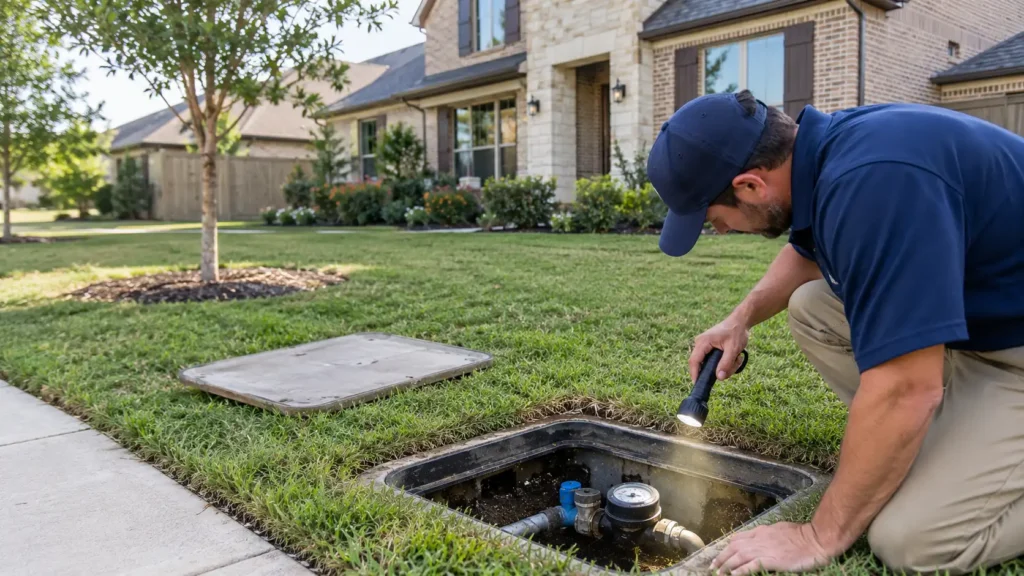
New home in Cypress TX with a water meter checked for a new construction plumbing leak A meter check is a quick way to confirm a new construction plumbing leak.
The paint is fresh. The yard is still being sodded. You moved into your new Cypress home a few months ago, and then the water bill arrives and it is double what it should be. Or you notice a warm spot on the floor, a damp baseboard, or the sound of water that has no reason to be running. A new construction plumbing leak feels especially unfair, because you did everything right and bought a home that has barely been lived in.
The good news is that a new home comes with protection most older homes do not have: a builder warranty. The catch is that how you handle the first few days can decide how smoothly it works. This guide explains why a new construction plumbing leak can happen, what a typical warranty covers, the exact steps to take in order, and how an independent leak location report can help. If you want a team to find the leak without opening your floors, see our Cypress leak detection page. This article is about protecting your rights and your home while you sort it out.
Why a New Construction Plumbing Leak Can Happen
New does not always mean leak free. Several things can go wrong in the first years of a home’s life.
Soil that is still settling. Many newer Cypress communities, including those around Bridgeland and Towne Lake, were built on land that was graded and filled. That soil keeps compacting and reacting to Houston’s wet and dry cycles for the first few years. Movement under a slab can stress pipes, fittings, and connections.
Damage during construction. Plumbing is installed early, then covered by framing, drywall, flooring, and cabinets. A fastener from a later trade can nick a line, and a small puncture may not leak noticeably until the system is pressurized and used for months.
Fitting and connection problems. Joints that were not fully seated, crimped, or glued can seep slowly. Appliance connections, water heater hookups, and outdoor spigots are common weak points.
Pressure issues. High incoming water pressure or a regulator that is not set properly strains every connection in the house.
Slab and foundation movement. A leak under a slab can also affect the soil around it, which is why a plumbing problem is never only a plumbing problem.
None of this means your builder did something wrong on purpose. It means that a new construction plumbing leak deserves a careful, documented response.
Know Your Warranty Timeline
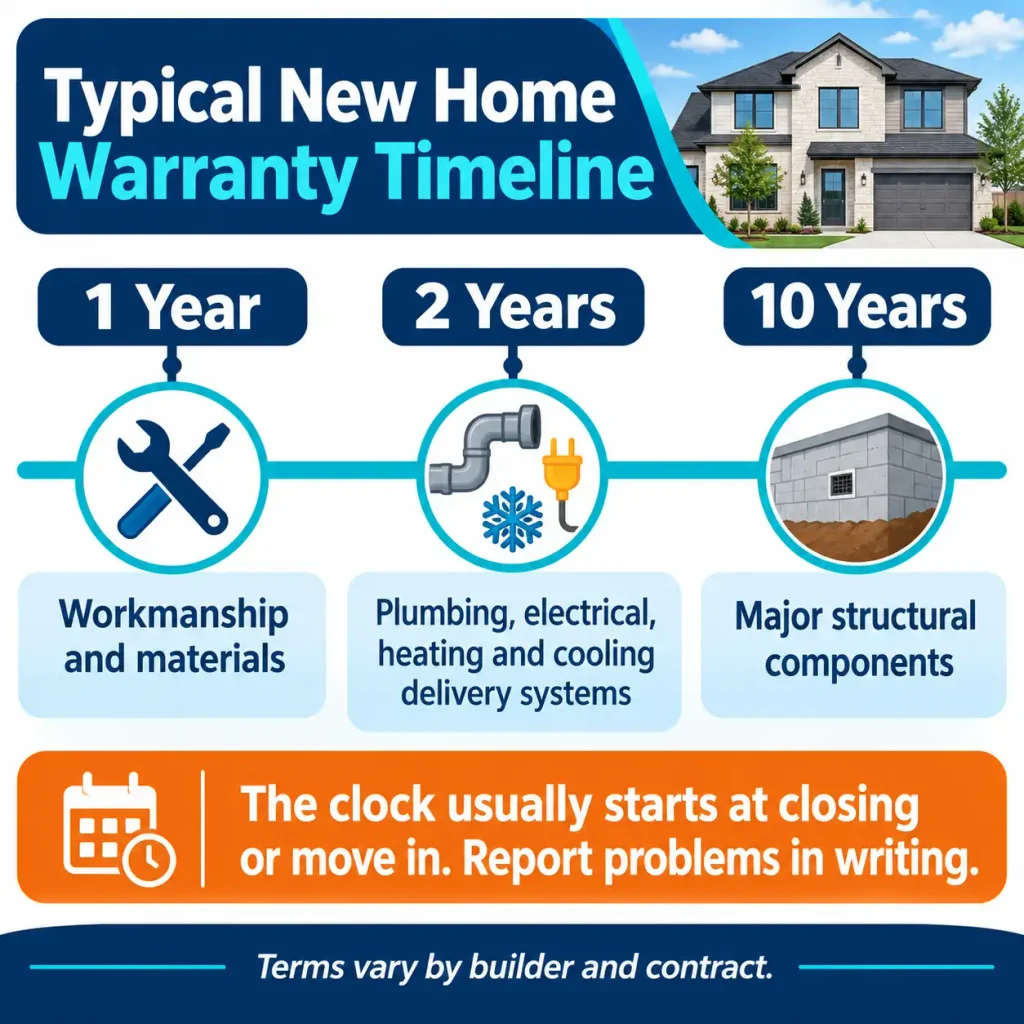
Many Texas builders use a one year, two year, and ten year warranty structure. Exact terms vary by builder and by contract, so read yours, but the general pattern looks like this.
| Time after closing | What is usually covered | Why it matters for a leak |
|---|---|---|
| 1 year | Workmanship and materials | Fixtures, finishes, and connections that were not installed correctly |
| 2 years | Plumbing, electrical, and heating and cooling delivery systems | A hidden leak in a supply line or fitting is often treated as a plumbing system issue |
| 10 years | Major structural components | A leak that leads to foundation movement may fall under structural coverage, with limits and conditions |
Three practical points follow from this.
First, the clock usually starts at closing or move in, so write that date down. Second, warranties require you to report problems in writing, often through a specific portal or form, and within a time limit. Third, some builders use third party warranty companies, and the claim process may differ. Check your paperwork for the administrator and the instructions.
What to Do First: Seven Steps in Order
If you think you have a new construction plumbing leak, move in this order.
- Confirm it with your water meter. Turn off everything that uses water, then check the meter. If the dial or low flow indicator keeps moving, water is escaping. Take a dated photo.
- Shut off the water if needed. If water is visibly running or flooding, close the main shutoff, then call a licensed plumber or your builder’s emergency line for urgent damage.
- Document everything. Take photos and video of stains, wet spots, the meter, and your recent water bills. Keep a log of dates and what you noticed.
- Read your warranty and contract. Find the claim procedure, the contact for warranty requests, and any rule about who may repair a covered problem.
- Notify your builder in writing right away. Use the method your warranty requires, such as a portal or email, and keep a copy. Do not rely on a phone call alone.
- Get an independent leak location report. A neutral specialist can pinpoint where the leak is and mark it, which gives you a clear, factual record.
- Hold off on permanent repairs until the builder has been told. Stopping the water and limiting damage is reasonable. Having an outside contractor open walls or floors before the builder sees the problem can complicate a claim, so ask the warranty department what they require.
Keep receipts for any emergency steps. If there is a dispute, consider speaking with a qualified professional about your contract and rights, since this article is general information, not legal advice.
Why an Independent Leak Report Helps
When a builder or its plumber inspects a leak, they may also be the party responsible for fixing it. That is not a problem in itself, but an independent report gives you something extra: a clear, written record from someone with no stake in the repair.
Our team locates leaks only and does not repair them. That means we have no reason to exaggerate the problem or to steer you toward a larger job. A useful report should include:
- The date and time of the inspection.
- The type of leak, such as a supply line, fitting, or slab leak.
- The marked location, plus photos of the marks.
- The methods used, such as acoustic sensors, thermal imaging, and pressure testing.
- Any related findings, such as high pressure or a moving meter.
You can share the report with your builder, your warranty administrator, a licensed plumber, and your insurance company. A precise location also helps the repair stay small, because the crew opens only the spot that needs attention. Our guide to slab leak repair options explains the choices that follow once the leak is found.
Where a New Construction Plumbing Leak Usually Hides
Knowing the usual suspects helps you look in the right places before you call anyone.
- Under the slab. Supply lines that run beneath the concrete can leak without any surface sign for weeks.
- Behind walls near fixtures. Shower valves, tub connections, and toilet supply lines are common spots.
- At the water heater and its connections. Fittings and relief valves can seep early. Our guide to an attic water heater leak covers what that looks like.
- Outdoor hose bibs and irrigation lines. These add pipe, valves, and fittings across the yard.
- Pool and spa plumbing. New pools can have fitting leaks, and our article on a pool losing water explains how to separate evaporation from a leak.
Cypress Conditions That Matter for New Homes
Cypress sits in the Cypress Creek watershed, the largest in Harris County, and the area gets heavy rain events that saturate the ground quickly. Soil that is wet one week and dry the next puts repeated stress on pipes under and around a new slab. Newer neighborhoods may also have long yard runs for irrigation, pools, and outdoor kitchens, which add more places for leaks.
Humidity and warm weather help mold and mildew take hold fast if water gets into a wall or under flooring, so a small leak in a closed space is not something to wait on. If the leak is outside, our article on an underground water line leak explains who is responsible and how to confirm it.
Smart Habits During the First Two Years
You can catch many problems early if you build a few habits.
- Record a baseline. Soon after moving in, turn off all water and photograph the meter. Repeat every few months.
- Check bills. A sudden jump with no change in usage is worth investigating immediately.
- Look for early signs. Damp baseboards, warm spots on the floor, musty smells, and stains on ceilings can all signal a hidden leak.
- Test around month ten or eleven. Schedule a plumbing and leak check before the one year warranty ends.
- Test again before month twenty four. Do another check before the two year systems coverage ends.
- Keep a file. Store the warranty booklet, claim confirmations, photos, and reports together.
Is It the Builder’s Problem or Yours?
Not every leak is a warranty issue. Warranties typically exclude damage from misuse, lack of maintenance, or events like freezing and flooding. A leak caused by a hose left running, a cut from a landscaping project, or a fixture that you installed yourself may fall outside coverage. That is another reason a neutral report is useful. It shows where the leak is and what kind it is, so everyone is talking about the same facts.
If the leak is in a gas line, treat it as an emergency, leave the building, and call 911 and your gas utility. Our gas leak detection page explains how we pinpoint gas leaks once everyone is safe.
What About Insurance?
Your homeowners policy and your builder warranty cover different things. Insurance often responds to sudden, accidental water damage, while a warranty covers defects in construction. Some losses may involve both. Call your insurer promptly, tell them you are also working with the builder, and ask what documentation they need. Keep your photos, receipts, and reports. This is general information, not insurance advice, so review your policy.
Frequently Asked Questions About a New Construction Plumbing Leak
Can a brand new house really have a plumbing leak?
Yes. Construction damage, loose fittings, high pressure, or settling soil can cause leaks in a new home, sometimes within the first year.
Does my builder have to fix a new construction plumbing leak?
It depends on your contract and warranty. Many builders cover plumbing systems for about two years, but terms vary. Read your warranty and report the problem in writing quickly.
Should I call the builder or a leak specialist first?
Stop the water if needed and notify the builder in writing right away. Getting an independent leak location report at the same time gives you a clear record.
Can I hire my own plumber to fix a leak in a warranty period?
Check your warranty first. Some require the builder to inspect or perform repairs, and outside work can affect coverage. Ask the warranty department about any new construction plumbing leak repair before you authorize work, unless you need an emergency fix to stop damage.
How do I know if the leak is under the slab?
Signs include a warm spot on the floor, the sound of running water, a moving meter with everything off, and damp flooring. A leak specialist can confirm the location without breaking the concrete.
Protect Your New Home Before the Warranty Clock Runs Out
A new construction plumbing leak is easier to handle when you act quickly and keep good records. If you suspect a hidden leak in a Cypress home, call us today for a free quote and same day service, or visit the Leak Detection Houston home page to see everything we cover.