
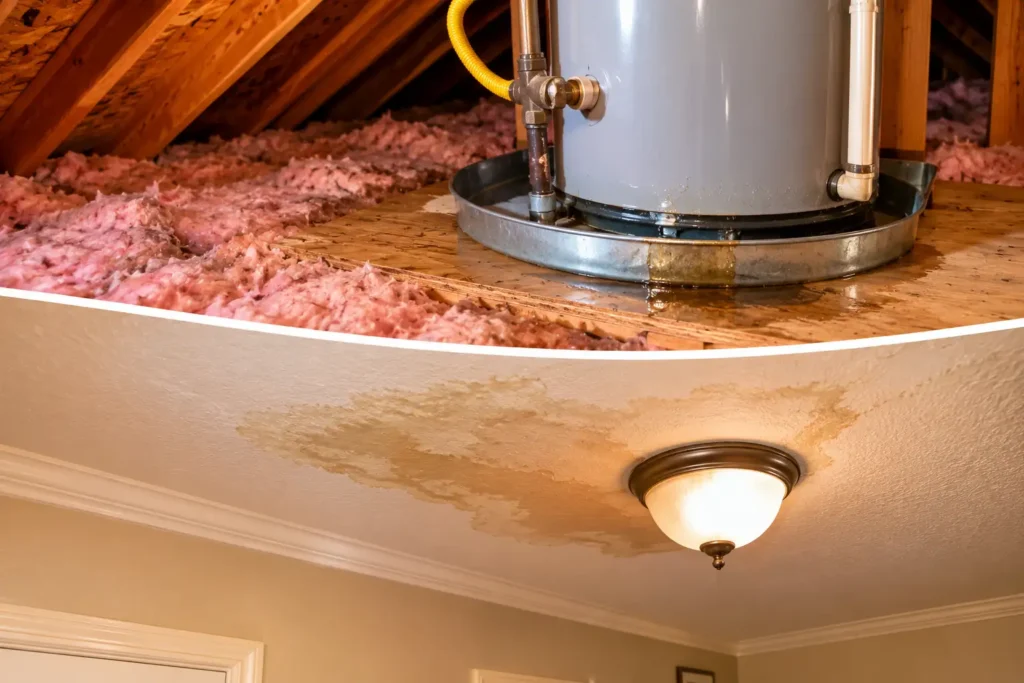
Attic water heater leak showing a drain pan in the attic and a water stained hallway ceiling below An attic water heater leak often shows up as a ceiling stain long after the water starts running.
It starts as a small brown stain in the hallway ceiling. A week later it has doubled in size. Then one morning there is a drip, a soft spot in the drywall, and a musty smell you cannot place. In many Houston homes, the cause is not the roof at all. It is an attic water heater leak, and by the time it shows itself downstairs, the water has often been running for a while.
This guide explains why attic water heaters are so common here, how to recognize a leak early, how to tell it apart from a roof or air conditioner problem, and exactly what to do in the first hour. If you want a specialist to locate hidden moisture without opening up your ceiling, our water leak detection service covers that. This article is for the homeowner standing in the hallway wondering what to do right now.
Why So Many Houston Homes Have Water Heaters in the Attic
Most Houston homes sit on concrete slabs instead of basements. That leaves builders with limited places to put mechanical equipment, and the attic is a common choice, along with garages and utility closets. Plenty of homeowners do not even know their water heater is up there until something goes wrong.
That placement creates a specific risk. A water heater in a garage leaks onto concrete and shows itself quickly. A water heater in the attic leaks onto insulation, wood framing, and drywall, and the water often travels sideways before it comes through a ceiling. Houston’s long wet seasons and high humidity make it harder for damp materials to dry, which gives mold and mildew a head start. The result is that an attic water heater leak can do far more damage than the same leak at ground level.
Why an Attic Water Heater Leak Costs More Than You Expect
Water follows the easiest path. It soaks into attic insulation, which acts like a sponge, then runs along ceiling joists until it finds a seam, a light fixture, or a low spot. By the time you see a stain, the damp area above is usually larger than the stain below.
That has a few consequences. Wet insulation loses its ability to insulate and can stay damp for weeks. Drywall can sag, stain, or collapse. Electrical fixtures and wiring may get wet. And the longer materials stay wet, the more likely mold becomes. A repair that would have been modest if caught early can become a repair of the heater, the ceiling, the insulation, and sometimes the wiring.
Signs of an Attic Water Heater Leak
Because the heater is out of sight, you have to read the clues in the rooms below.
- A brown or yellow ceiling stain that grows and does not follow rain.
- A damp, bulging, or soft section of ceiling drywall.
- A musty smell in a hallway or closet near the attic access.
- Water stains on walls near the heater location.
- A steady drip or the sound of running or dripping water with nothing in use.
- Rust colored water in the drain pan or on the attic floor.
- A sudden rise in your water bill.
- Hot water that runs out faster than usual, or a heater that seems to run constantly.
Any one of these can have another cause. Together, or with an older heater, they are a strong reason to investigate right away.
Is It the Water Heater, the AC, or the Roof?
This is the most common confusion in Houston, because the attic often holds the water heater, the air handler, and the roof deck all at once. A ceiling stain can come from any of them.

A few quick clues help:
- Timing. A stain that grows during or right after rain points to the roof. A stain that grows on dry, hot days may point to the air conditioner’s condensation or to a plumbing leak.
- Location. A stain directly below the water heater area is a strong suspect. A stain near the air handler or the condensate drain line may be the air conditioner.
- Water type. Water heater leaks may be rusty or warm. Air conditioner condensation is usually clear and cool. Roof water often leaves a dirty ring.
- Pattern. A heater leak usually runs all the time. A roof leak comes and goes with weather.
If you are still not sure, our guide to a roof leak after a storm walks through the first 24 hours and explains how to check whether the roof is the cause. A leak specialist can also pinpoint the source with non invasive tools so you are not guessing.
Common Causes of an Attic Water Heater Leak
Most leaks fall into a handful of categories.
Tank corrosion. Tank water heaters typically last around eight to twelve years, and sometimes less in areas with hard water. Over time, sediment builds up at the bottom, the inside of the tank corrodes, and eventually it develops a hole. A leak from the tank itself usually means replacement, not repair.
Temperature and pressure relief valve. This safety valve releases water when pressure or temperature gets too high. If it drips, the cause might be high water pressure, a failing valve, or a heater running too hot.
Drain valve. The valve near the bottom of the tank can loosen or wear out and drip. It is often one of the less expensive problems to fix.
Connections and fittings. Supply lines, flexible connectors, and fittings can loosen, corrode, or crack, especially in a hot attic where temperatures swing widely.
Overflowing drain pan. Many attic installations include a pan and a drain line to catch small leaks. If the pan is clogged, cracked, or overwhelmed, water spills over the edge.
High water pressure. Excess pressure strains the tank, valves, and fittings. If your home has low water pressure at some fixtures and very high pressure at others, ask a licensed professional to check it.
What to Do First
If you suspect an attic water heater leak, move in a calm order. Safety comes before everything else.
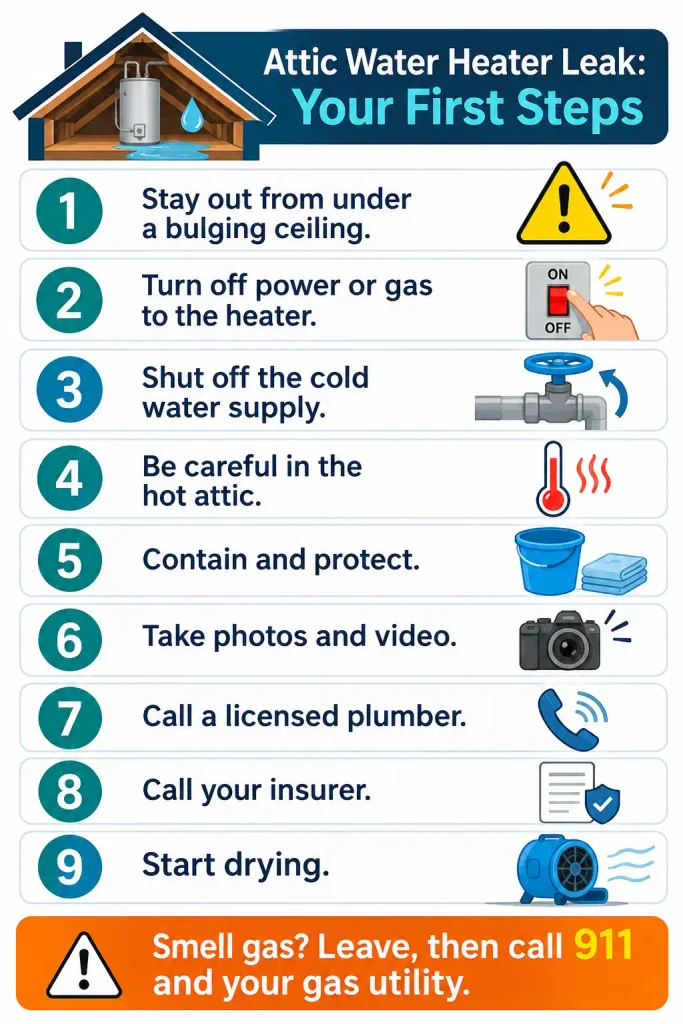
Infographic checklist of nine first steps after an attic water heater leak Safety, shutoff, documentation, and drying come in that order.
- Stay out from under a bulging ceiling. If drywall is sagging with trapped water, move people and pets away. Do not stand directly beneath it.
- Turn off power to the heater. For an electric heater, switch off its breaker. For a gas heater, set the gas control to off or pilot if you know how. If you smell gas at any point, leave the house and call 911 and your gas utility from outside.
- Shut off the cold water supply to the heater. There is usually a valve on the cold water pipe above the tank. If you cannot reach it safely, close the main water shutoff for the house.
- Be careful in the attic. Attics are hot, the floor may be unfinished, and wet insulation hides framing. Step only on joists, and avoid touching wiring or fixtures near water. If it is not safe, wait for a professional.
- Contain and protect. Place buckets under drips and move furniture and valuables away.
- Take photos and video. Document the ceiling, the heater, the pan, and any wet insulation before anything is moved.
- Call a licensed houston plumber. Water heater repair and replacement should be done by a licensed professional.
- Call your insurance company if there is damage, and ask what documentation they need.
- Start drying. Fans and a dehumidifier help once the leak is stopped, because mold can start in a day or two on damp materials.
If your heater runs on natural gas or propane, there is an extra safety reason to be careful. A gas smell near the heater is an emergency. Leave first and call 911 and your gas utility. After the area is cleared, our gas leak detection page explains how we pinpoint the source.
Repair or Replace?
A good rule is to ask where the water is coming from. A leaking drain valve, a loose connection, or a failing relief valve can often be repaired, and those repairs are usually on the lower end of plumbing costs, often a few hundred dollars. A leak from the tank itself cannot be patched, and replacement typically runs into the thousands depending on the size and type of heater and the attic access.
Age is the other factor. If your tank heater is already near or beyond ten years old, replacing it may make more sense than repairing a small problem, especially if the heater is in the attic where a future failure is costly. Ask your plumber about adding a drain pan with a proper drain line, a leak sensor, or an automatic shutoff device when the new heater goes in. These small additions can turn a catastrophic leak into a minor one. Ask about financing options if the cost is a concern.
When the Water Heater Is Not the Cause
Sometimes the leak is elsewhere. A clogged air conditioner condensate line is a frequent culprit in Houston attics. A supply line to a bathroom or a pipe fitting in the ceiling can also leak. If your water bill is rising but the attic looks dry, the problem may be outside the house, and our article on an underground water line leak explains how to confirm it and who is responsible.
If you cannot tell where the water is coming from, locate before you repair. Replacing a water heater that was not actually leaking is an expensive mistake.
How to Prevent an Attic Water Heater Leak
You cannot eliminate every failure, but you can lower the odds.
- Know the age of your heater and plan for replacement around the eight to twelve year mark.
- Have the heater and its pan inspected during annual plumbing inspections.
- Make sure the drain pan is clean, intact, and connected to a drain line that actually exits the house.
- Flush the tank for sediment and check the anode rod on the schedule your plumber recommends.
- Check your water pressure and the pressure relief valve.
- Install a leak sensor or automatic shutoff near the heater.
- Take a quick look at the attic access area and your ceilings every few months for new stains.
A few minutes of attention a season costs far less than a flooded ceiling.
What About Insurance?
Coverage depends on your policy and the cause. Many policies cover sudden and accidental water damage, such as a burst tank or a failed fitting, but may not cover damage from a slow leak that went unnoticed for a long time or the cost of replacing the heater itself. Some policies treat maintenance related failures differently. Call your insurer early, keep your photos and receipts, and ask what is and is not covered. This is general information, not insurance advice, so review your own policy.
Frequently Asked Questions About an Attic Water Heater Leak
How do I know if my ceiling stain is from the water heater?
Look at the location and the pattern. A stain near the heater area that keeps growing regardless of rain suggests a water heater or plumbing leak. A stain that grows during storms suggests the roof.
Can I keep using a leaking water heater?
Do not. Turn off power or gas and shut off the water supply to the heater until a licensed professional can inspect it.
How long do tank water heaters last in Houston?
Many tank heaters last around eight to twelve years, and sometimes less with hard water and little maintenance.
Is an attic water heater leak covered by homeowners insurance?
It depends on the policy and the cause. Sudden damage is more likely to be covered than long term seepage. Ask your insurer before the cleanup begins.
Should I replace the water heater or repair it?
If the tank itself is leaking, replacement is usually the answer. If the leak is from a valve or fitting, repair may work, especially on a newer heater.
Find the Source Before You Spend
An attic water heater leak rarely fixes itself, and waiting makes everything more expensive. If you are not sure where the water is coming from, call us today for a free quote and same day service across Houston, Katy, Sugar Land, and The Woodlands, or visit the Leak Detection Houston home page to see everything we cover.