

Houston home with a blue tarp covering a roof leak after a storm A secured tarp is a common temporary fix for a roof leak after a storm.
The storm passes, the sky clears, and then you hear it. A slow drip in the hallway. A brown ring spreading across the living room ceiling. A roof leak after a storm is one of the most stressful surprises a Houston homeowner can face, mostly because everything feels urgent at once. Do you climb up there? Call the insurance company? Call a roofer? Grab every bucket in the garage?
The good news is that the first day follows a simple order. What you do in the first few hours decides how much damage spreads, how smoothly a claim goes, and how much you spend. This guide covers a roof leak after a storm from the homeowner’s side: staying safe, protecting the house, documenting everything, dealing with insurance, and knowing when to bring in a specialist. If you already know you have a leak and need help tracing exactly where it enters, our roof leak detection service is built for that. This article is about everything that happens around it.
Why a Roof Leak After a Storm Is So Common in Houston
Houston roofs work hard. Heavy rain arrives in short, intense bursts. Wind can lift shingles, loosen flashing, or drive water sideways under edges that normally stay dry. Hail, though less frequent, leaves bruised and cracked shingles that may not leak until the next rain. Hurricane season officially runs through the end of November, so the risk is still real this time of year.
High humidity adds another problem. Even a small amount of water that reaches the attic can stay damp for days instead of drying out. Older homes face extra risk, since aging shingles, worn sealant, and rusted flashing give water more places to enter.
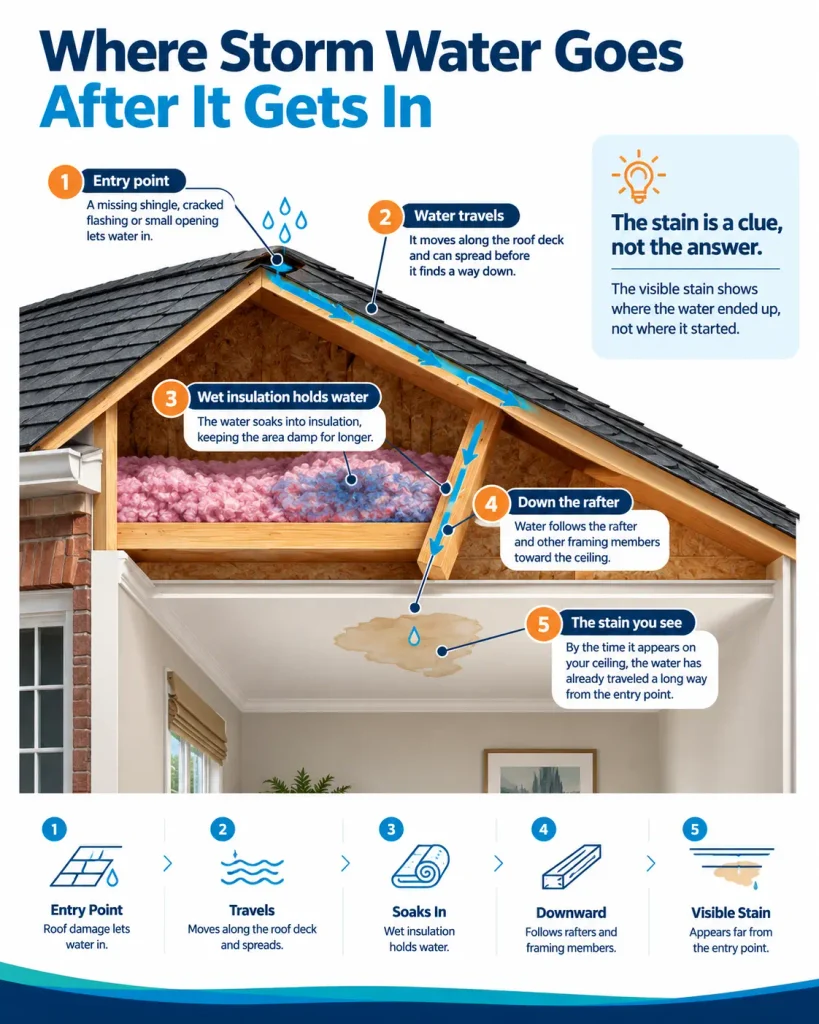
Many leaks also do not show up where the water gets in. Water can run along the roof deck, soak into insulation, and travel down a rafter before it finally appears as a stain somewhere far from the actual opening. That is why the spot on your ceiling is a clue, not a final answer.
The First Hour: Safety Before Anything Else
Timeline infographic of the first 24 hours after a roof leak after a storm Safety first, then containment, documentation, and temporary protection.
Your first job is not repairing the roof. It is keeping everyone safe.
Stay off the roof. A wet roof is slippery, and storm damage can hide weak spots. Look from the ground, or use your phone’s zoom to check for missing shingles, sagging areas, or debris. Falls from roofs cause serious injuries every year, and no leak is worth that risk.
Watch for electrical hazards. If water is dripping near light fixtures, ceiling fans, outlets, or the electrical panel, stay away from those areas. If a ceiling is bulging with trapped water, or water is running through a light fixture, turn off power to that part of the house at the breaker if you can reach it safely, and call a licensed electrician.
Be careful with sagging ceilings. A bulge can mean a lot of water is sitting above it. If you can do it safely, poke a small hole at the lowest point of the bulge with a screwdriver while standing to the side, and let the water drain into a bucket. That relieves weight and prevents a sudden collapse. If it looks large or unstable, leave the room and call for help.
Protect the House While You Wait
Once everyone is safe, limit the damage. Insurers generally expect homeowners to take reasonable steps to prevent more harm after a loss, and doing so also protects your belongings.
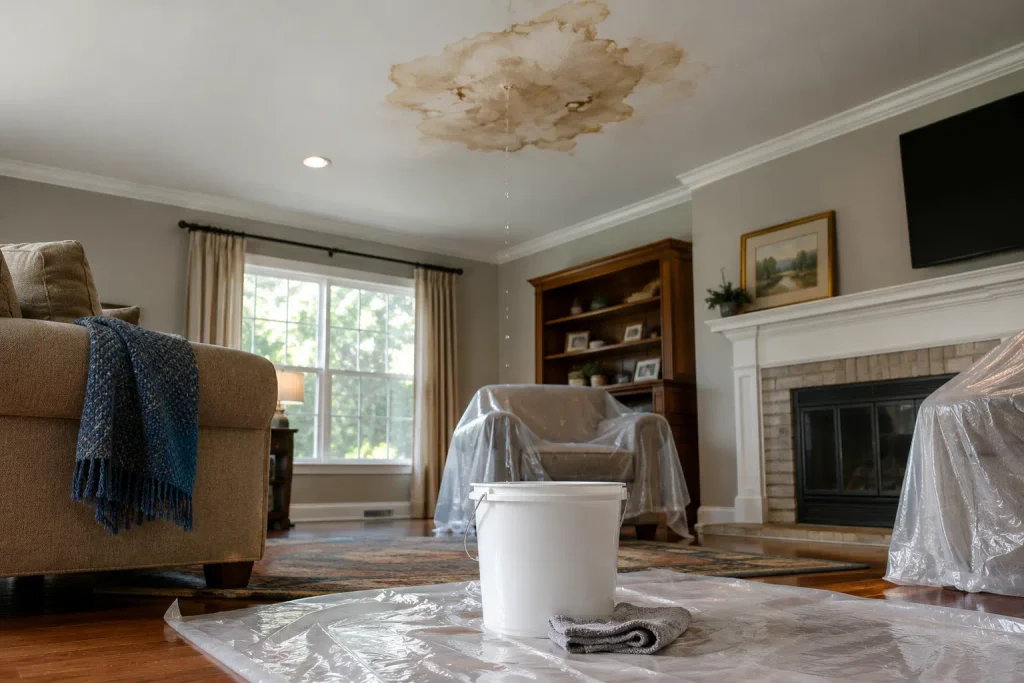
- Catch the water. Put buckets or containers under drips. A towel in the bottom stops splashing.
- Move valuables. Pull furniture, electronics, and rugs away from the wet area.
- Lift and cover. If furniture is too heavy to move, cover it with plastic sheeting.
- Open the attic access if it is safe, so you can see whether insulation is wet. Do not step on wet insulation or between joists.
- Run fans and a dehumidifier in affected rooms once the active leak is controlled.
Moisture is the real clock here. Drying wet materials quickly is widely recommended because mold can begin to grow within a day or two on damp drywall, insulation, and wood, and Houston’s humidity makes that window feel even shorter.
Learn More : How To Detect Roof Leaks?
Document Everything Before You Clean Up
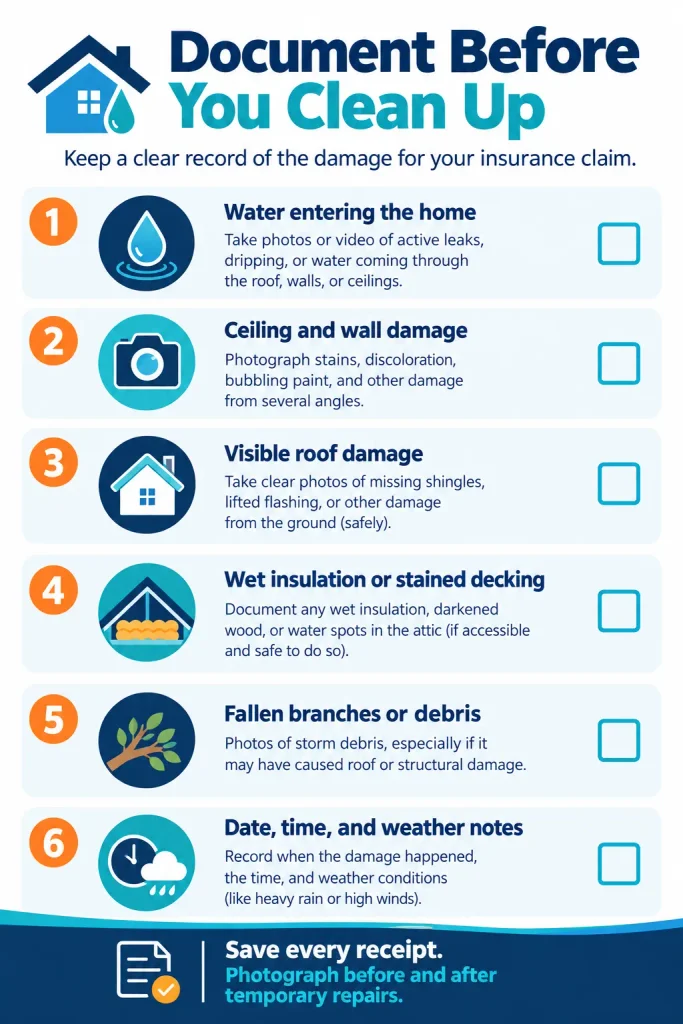
This step feels like paperwork, but it can be the difference between a smooth claim and a frustrating one. Take photos and video before you move anything, mop anything, or have anyone start repairs.
Capture:
- Water entering the home, including drips, stains, and wet floors.
- Ceiling and wall damage from several angles, with something in the frame for scale.
- Visible roof damage from the ground, such as missing shingles or displaced flashing.
- Any wet insulation or stained decking you can see from the attic access.
- Storm related debris, such as fallen branches on or near the roof.
- The date, time, and weather conditions when you first noticed the leak.
Keep a simple log of what happened and when. Save every receipt for emergency supplies, fans, and temporary repairs. Photos taken before and after temporary work are especially useful.
Temporary Repairs: What Is Reasonable
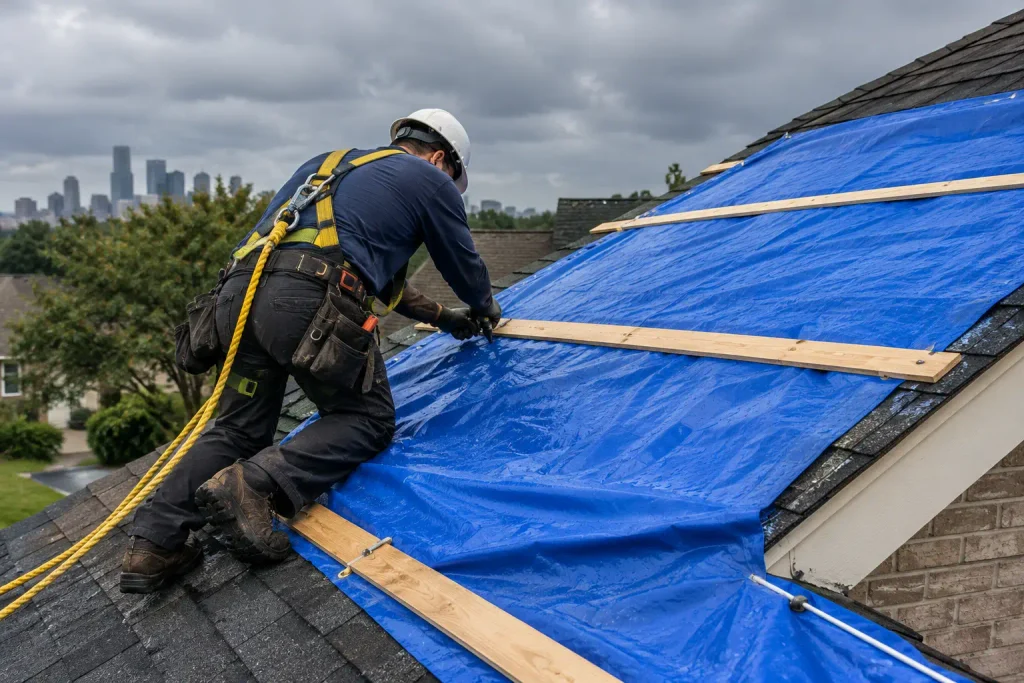
The goal of a temporary repair is to stop further water from entering until permanent repairs can be made. Covering exposed areas with a properly secured tarp or plastic sheeting is the usual approach. Texas insurance guidance generally supports making temporary repairs to prevent additional damage, but it also advises against permanent repairs until an adjuster has a chance to see the damage.
Because roofs are dangerous, tarping is a job for a roofer or an emergency repair crew. A poorly secured tarp can blow off and cause more trouble. If you hire someone, ask what they will do, how they will attach it without causing more damage, and what they will charge, and save the invoice.
Call Your Insurance Company Early
Report the damage promptly. Many policies require timely notice, and early reports tend to reduce disputes about when and how the damage happened. When you call, have your policy number, the date of the storm, your photos, and your notes ready. Ask what the adjuster will need and whether any temporary repair affects the claim.
Coverage often depends on the cause. A roof leak after a storm caused by sudden wind or hail damage is treated differently from a leak caused by long term wear, poor maintenance, or repeated seepage. Standard policies often cover sudden storm damage but may exclude damage from gradual deterioration. Many Texas policies also carry a separate wind and hail deductible, sometimes as a percentage of the home’s insured value, so look at your declarations page before you assume what you will owe.
A few practical points:
- Do not sign a contract with anyone who knocks on your door right after a storm and pressures you to decide on the spot.
- Get written estimates from licensed, insured contractors.
- Ask your insurer for the claim number and your adjuster’s contact information, and keep all correspondence.
- If the claim is denied or the payment seems too low, you can ask for a written explanation and review your options with the Texas Department of Insurance.
This is general information, not legal or insurance advice. Read your own policy for exact terms.
Check the Hidden Places
The ceiling stain you can see is often only part of the story. After the rain stops and it is safe to look, check the places where water likes to collect:
- The attic floor and insulation below the damaged area.
- The underside of the roof decking for dark stains or damp wood.
- Walls below the leak, especially around window frames and recessed lights.
- Closet corners and the ceilings of upstairs bedrooms, where small leaks tend to hide.
- Musty smells, which can show up before visible mold does.
Wet insulation holds water like a sponge and can keep a ceiling damp long after the roof itself has been patched. In many cases it needs to be removed and replaced. If you notice mold growth or mildew growth, treat that as a separate issue and have it assessed before covering it up with paint.
Is It Really the Roof?
Sometimes it is not. A stain on the ceiling after heavy rain might be the roof, but it could also be a plumbing line, an air conditioning drain pan, a condensation problem, or even a water heater in the attic. If your ceiling stain is on a floor with a bathroom above it, or the stain appears when it has not rained, the cause may be inside the house.
A quick test helps. If the stain grows only during or right after rain, the roof is the top suspect. If it changes with no rain, or you hear running water, check plumbing. When you cannot tell, a professional can sort it out, and our water leak detection team can check whether a plumbing issue is behind the damp spot.
When a Specialist Makes Sense
Roofers are essential for repairs, but they do not always find the exact entry point for a stubborn leak. If patches have not stopped the problem, or you want proof of the source for a claim, a leak specialist can trace the actual path of the water with non invasive tools instead of opening up large sections of ceiling or roof. That reduces guesswork, avoids repeat repairs, and gives you a written finding you can share with your roofer and your insurer. Our team serves Houston, Katy, Sugar Land, and The Woodlands, and you can contact us for a free quote.
How to Lower the Risk of a Roof Leak After a Storm
You cannot stop Houston weather, but you can make your roof harder to beat.
- Schedule a roof inspection once a year, ideally before the heaviest part of storm season.
- Replace cracked, curled, or missing shingles early, before the next rain.
- Check flashing around chimneys, vents, skylights, and valleys.
- Keep gutters and downspouts clear so water does not back up under the edge.
- Trim branches that hang over the roof.
- Take dated photos of your roof and attic in good condition, so you have a baseline.
Small repairs cost far less than the significant damage that follows a leak you ignored. A ten minute look every season is cheap insurance.
Frequently Asked Questions About a Roof Leak After a Storm
Is a roof leak after a storm an emergency?
If water is actively entering the house, treat it as urgent. Control the water, stay safe, document the damage, and arrange a temporary cover as soon as it can be done safely.
Should I wait for the adjuster before tarping the roof?
No. Reasonable temporary protection is expected so that more damage does not occur. Take photos first, keep receipts, and hold off on permanent repairs until the damage has been seen.
Can I fix a roof leak after a storm myself?
Small interior steps like catching water and drying out rooms are fine. Work on the roof itself is risky and best left to professionals.
How long can I wait before mold becomes a problem?
Mold can start growing in a day or two on materials that stay wet, so quick drying matters. If damp areas are not drying out, get them checked.
Will insurance cover the whole roof?
Will insurance cover the whole roof? Not always. Coverage depends on the cause, the age and condition of the roof, and your policy terms. Ask your insurer exactly what is and is not covered.
Take the Next Step
A roof leak after a storm rarely fixes itself, and waiting makes everything more expensive. Stay safe, document the damage, protect your home, and call your insurer early. If you need to know exactly where the water is getting in, call us today for a free quote and same day service across the Houston area.