

Older home plumbing in Houston is one of the most overlooked risks in the city’s most beloved historic neighborhoods. If your property in The Heights, Montrose, or River Oaks was built between the 1920s and the early 1970s, there is a very strong probability that the cast iron sewer lines and galvanized steel water pipes installed during original construction are still in the ground beneath your home today, working silently past their design life in one of the most demanding soil and climate environments in the country.
That combination of age, Houston’s relentlessly shifting Beaumont Clay, year-round humidity, and a water chemistry that accelerates internal pipe corrosion faster than most Texas cities creates a situation that catches a significant number of historic Houston homeowners off guard. Not because the warning signs were absent, but because older home plumbing Houston problems develop gradually and largely out of sight, underneath the original hardwood floors and behind the plaster walls that make these properties irreplaceable.
This guide is written specifically for owners of historic Houston properties in these three neighborhoods. It covers what cast iron sewer lines look like when they fail and why, what galvanized steel pipe failure feels like inside your home before it becomes visible damage, and how modern non-invasive leak detection technology allows experienced plumbing professionals to diagnose and address these systems without destroying the historic character that makes your property worth protecting in the first place.
Why Houston Is Harder on Old Pipes Than Almost Any Other City
Before diving into what fails and why, it is worth understanding why Houston specifically accelerates the deterioration of older plumbing materials at a rate that homeowners from other parts of the country often find surprising.
Houston sits on one of the most geologically active urban soils in the United States. The city’s subsurface is dominated by a highly expansive clay known locally as Houston Black Clay or “Beaumont Clay,” which has one defining characteristic that affects everything built on top of it or buried within it: it swells dramatically when wet and contracts dramatically when dry.
In a city that experiences both intense drought periods and some of the most severe rainfall events in North American history, that clay is constantly in motion. It expands during Houston’s wet months, pushing upward and laterally against whatever it surrounds. It contracts during dry periods, pulling away from structures and leaving voids beneath slabs and around buried pipe connections. This cycle of expansion and contraction repeats across decades, and for rigid pipe materials like cast iron and galvanized steel, that constant low-grade physical stress eventually breaks something.
Houston’s high humidity compounds this by maintaining constant moisture contact with buried metal pipes, accelerating the electrochemical corrosion process from the outside while the pipes are simultaneously corroding from the inside. Add in Houston’s history of subsidence (portions of the city have sunk measurably over the past century due to groundwater extraction and soil compression), and the environment that buried pipes in these neighborhoods have been operating in for 50-plus years is genuinely severe.
This is why neighborhoods like The Heights, Montrose, and River Oaks see cast iron and galvanized steel failures at rates that surprise even experienced plumbers who have worked in other Texas cities. The pipes are old, the soil never stopped moving, and Houston’s climate kept the corrosion process running year-round without a winter freeze to slow it down.
The Cast Iron Crisis Beneath Historic Houston Homes
What Cast Iron Pipe Was Designed To Do
Cast iron drain pipe was the dominant material for residential sewer and drain systems in Houston construction from roughly the 1930s through the early 1970s. It was chosen for good reasons: it is extremely strong under vertical load, resists crushing from above, dampens drain noise effectively, and when manufactured to proper standards, cast iron pipe has genuine longevity under normal conditions. Homes in The Heights, Montrose, and River Oaks that were built during this era almost universally had their original drain and sewer lines installed in cast iron.
The design life that engineers and manufacturers originally stated for cast iron drain pipe was 50 to 75 years under typical conditions. If your Heights bungalow was built in 1945, that design life window closed somewhere between 1995 and 2020. If your Montrose property dates to 1963, the lower end of that range was reached in 2013. River Oaks estates constructed in the 1920s and 1930s have pipes that are now approaching or exceeding a century of service.
Under normal soil and climate conditions, that would mean gradual, manageable deterioration that might allow more years of service. In Houston’s clay soil environment, it often means these systems are significantly more compromised than their age alone would suggest.
How Cast Iron Pipe Actually Fails: Channeling and Collapse
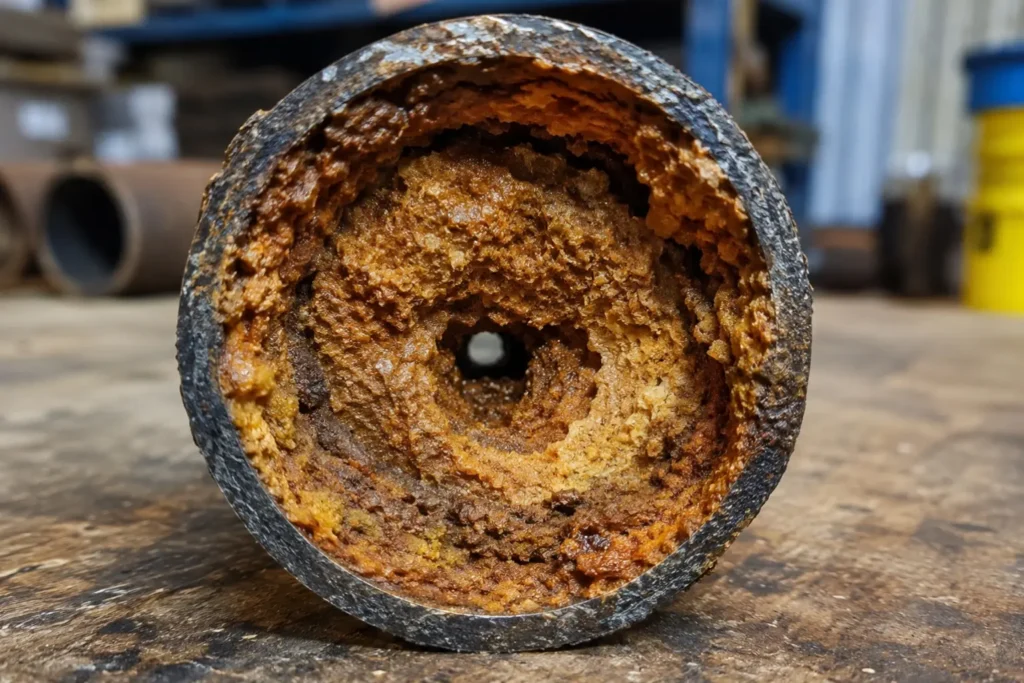
The failure mode of cast iron sewer pipe is specific and predictable once you understand the chemistry involved. As drain water, waste, and sewer gases move through a cast iron line over decades, hydrogen sulfide gas produced by organic waste reacts with moisture inside the pipe to form sulfuric acid. This acid attack is concentrated at the waterline, the point where the liquid surface meets the air space inside the pipe.
The result is a process plumbers call channeling. The bottom of the pipe, where water and waste flow, corrodes away progressively. The acid eats through the metal at the waterline with particular aggression, eventually creating a groove or channel along the bottom of the pipe that deepens with each passing year. What remains is a pipe that looks structurally intact from certain angles but has essentially no floor left. Waste and liquid are now moving through a trough of corroded metal into the surrounding soil rather than continuing to the city sewer connection.
In Houston’s clay soil, this situation creates a secondary problem. The escaping sewage saturates the clay immediately surrounding the pipe, and that saturated clay expands. That expansion places additional lateral and vertical pressure on the already weakened pipe walls, accelerating fragmentation. In older Heights and Montrose homes with cast iron lines running beneath concrete slabs, this process can progress for years before a homeowner notices any surface indication. By the time the evidence becomes visible, the pipe section involved is often completely compromised.
Cast iron pipe also fails at joints. The original lead-and-oakum joints used in pre-1960s Houston construction were effective when the pipes were new and the soil around them was stable. After decades of Houston clay movement, those joints have been stressed by hundreds of expansion and contraction cycles. Even if the pipe sections themselves retain some structural integrity, the joints between them frequently fail first, creating discrete leak points at regular intervals along the line.
Tree Roots and Cast Iron: The Specific Challenge in River Oaks and The Heights
River Oaks takes its name from the magnificent old-growth oak trees that line its streets and fill its private properties. The Heights is similarly defined by its mature urban tree canopy. These trees are among the most beloved features of both neighborhoods and a significant part of their property values.
They are also a serious and ongoing threat to cast iron sewer lines.
Tree roots grow toward moisture and nutrient sources. A compromised cast iron sewer joint, even one with only a hairline gap, emits both moisture and the organic nutrients that tree roots seek. Fine feeder roots find those gaps and enter the pipe. Once inside, they encounter an ideal growth environment and begin expanding rapidly, eventually filling pipe sections completely, creating root balls at bends and connections, and fracturing deteriorated pipe sections outright.
In River Oaks specifically, where properties feature mature oaks with root systems extending 50 to 100 feet from the trunk, a single tree can have root infiltration in multiple sewer line segments simultaneously. This is not an exaggeration, and our experience with plumbing leak detection River Oaks work confirms it regularly. A property can appear to have four or five separate slow drain complaints that are actually one continuous root infiltration running from a single tree’s root system across multiple pipe sections.
Removing the roots temporarily with mechanical equipment or hydro jetting is a genuine short-term solution. If the pipe joints and wall integrity are not addressed, the roots return within one to three growing seasons because the conditions that attracted them have not changed.
Warning Signs of Cast Iron Sewer Failure in Your Houston Home
These symptoms do not always indicate cast iron failure specifically, but they are the patterns that consistently appear in The Heights, Montrose, and River Oaks homes when cast iron sewer lines are in advanced deterioration.
Slow drains that affect multiple fixtures simultaneously. When a single drain runs slowly, the issue is usually localized to that fixture’s drain line. When your kitchen sink, a bathroom sink, and a toilet are all draining sluggishly at the same time with no recent change in usage patterns, the problem is almost certainly in the main sewer line that those fixtures share. This is one of the earliest and most consistent indicators of cast iron degradation or root infiltration in older Houston homes.
Recurring drain backups despite professional clearing. Hydro jetting or mechanical snaking of a compromised cast iron line provides temporary relief. When the backup returns within a few weeks or months after clearing, the root cause is structural, meaning the pipe itself is damaged, not just temporarily obstructed. Repeated drain service calls that do not produce lasting improvement are a clear signal that a camera inspection of the line is the necessary next step rather than another clearing visit.
A persistent sulfur or sewage smell in bathrooms, floor drains, or the yard. A functioning sewer line contains and conveys sewage gases to the municipal system. A channeled or cracked cast iron line releases those gases into the surrounding soil, where they can permeate upward through floor drains, the soil around your foundation, or through gaps in slab penetrations. A sewage smell that appears in bathrooms when no drain backup is present, or that is consistently noticeable near the exterior of the home in specific areas, often traces back to a compromised sewer line.
Unexplained lush or soggy patches in the lawn. Escaping sewage from a deteriorated line acts as a continuous, involuntary fertilization and irrigation of the soil directly above the break. A strip of unusually green, lush grass following the approximate path of your sewer line to the street, or a persistently wet area of the yard during dry weather, are visual indicators that sewage is escaping into the surrounding soil. Montrose homeowners often notice this pattern along the side yard or parkway where the sewer lateral runs to the city connection.
Sinking or cracked paving materials over buried lines. As cast iron deteriorates and sewage saturates the surrounding clay, the soil immediately below hardscape surfaces can lose compaction and begin settling unevenly. Paver stones that sink or tilt along the approximate path of a buried sewer line, or concrete driveways and walkways that crack in linear patterns following underground infrastructure, are indicators that something below the surface has changed.
The Galvanized Steel Trap in Supply Lines
What Galvanized Steel Pipe Was Designed to Do
While cast iron was the standard for drain and sewer lines, galvanized steel pipe was the dominant material for water supply lines in Houston residential construction from roughly the 1920s through the 1960s. Galvanized steel is carbon steel pipe coated with a layer of zinc on both the interior and exterior surfaces during manufacturing. The zinc coating was intended to protect the underlying steel from corrosion, and in environments with benign water chemistry and stable conditions, galvanized supply lines could remain serviceable for 40 to 70 years.
In Houston’s specific water chemistry environment, that timeline is considerably compressed. Houston’s municipal water supply, sourced from surface water and treated at multiple facilities, has chemical characteristics that are particularly corrosive to galvanized steel. The zinc coating that protects galvanized pipe deteriorates faster in Houston’s water than in many other Texas cities, and once that zinc layer is depleted in any section of pipe, the underlying steel is exposed to direct water contact and begins rusting.
Every Craftsman bungalow in The Heights built in the 1930s and 1940s, every Mediterranean Revival home in Montrose constructed in the same era, and every River Oaks estate from the 1920s and early 1930s that has not had its supply plumbing updated is almost certainly operating on galvanized steel supply lines that have either already begun failing internally or are significantly past their design service life.
How Galvanized Steel Fails: Inside-Out Corrosion
The specific failure mechanism of galvanized supply pipe is the inverse of cast iron. Cast iron corrodes from the outside in, driven by moisture, soil chemistry, and sewer gas reactions. Galvanized steel corrodes from the inside out, driven by the water it was installed to carry.
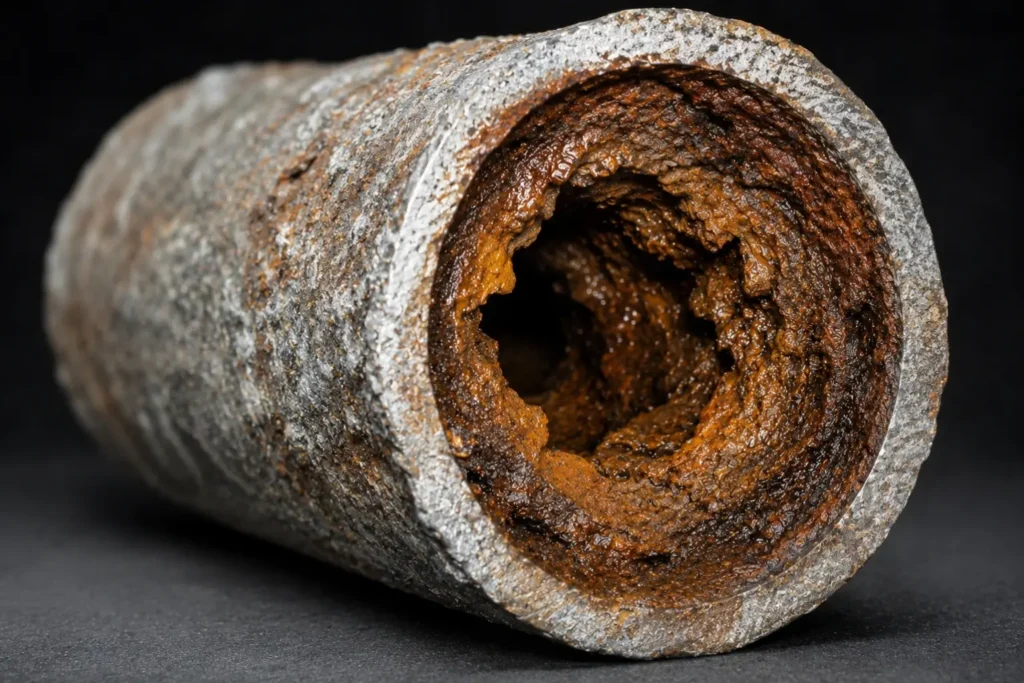
Once the zinc coating is depleted, typically in sections where water chemistry is most aggressive or where the pipe experiences the most turbulent flow like at elbows and tee connections, the steel substrate begins forming rust scale on the interior pipe wall. This rust scale does not flush away cleanly. It accumulates in layers, progressively reducing the interior diameter of the pipe. A galvanized steel supply line that was originally three-quarters of an inch inside diameter may have a functional interior diameter of half an inch or less after several decades of rust scale accumulation, representing a significant reduction in flow capacity.
The rust scale is also not uniformly distributed. It forms thicker deposits at elbows, at threaded connections, and at any point where water velocity changes. Those concentrated deposits become the sites of eventual pinhole leak failures. The rust scale weakens the pipe wall from within at those concentrated points until water pressure finds a path through a microscopic breach in the metal. The result is a pinhole leak inside a wall, under a floor, or behind a kitchen cabinet that can discharge water slowly for weeks or months before it becomes visible as staining, bubbling paint, or a wet area in wall framing.
In Houston, this failure pattern has a seasonal dimension. During the rare but real periods of cold weather that Houston experiences, thermal contraction of already-stressed galvanized pipe walls accelerates pinhole failures at the points where rust scale has created thin spots in the metal. The Heights, Montrose, and River Oaks all sit on elevated terrain relative to Houston’s bayou bottoms, but the same cold events affect all neighborhoods equally, and each winter cold event is a stress test on aging galvanized supply lines.
Warning Signs of Galvanized Steel Pipe Failure
Rust colored or tea stained water, particularly in the morning. When galvanized pipe is corroding internally, water that sits in the supply line overnight picks up iron and rust particles from the pipe walls. Opening a faucet first thing in the morning after several hours of no use often produces a flush of discolored water that ranges from pale yellow to deep brown before clearing. This discolored flush is rust and metal particles from inside your supply pipes. It does not improve on its own and becomes more pronounced as interior corrosion advances.
Reduced water pressure at all fixtures simultaneously. When water pressure drops noticeably throughout your entire house rather than at a single fixture, the cause is frequently rust scale accumulation in the main supply line sections serving the home. Individual fixtures can have pressure issues from their own shut-off valves or supply connections, but whole-home pressure reduction that has developed gradually over a period of years is a pattern consistent with progressive interior diameter restriction from galvanized steel corrosion. Houston Heights homeowners who attribute low water pressure to city supply issues often discover after pipe replacement that their pressure improves dramatically because the restriction was inside their own pipes.
Pinhole leaks appearing in walls, ceilings, or under sinks. A pinhole leak from a galvanized supply line may start as a barely perceptible drip. Because these leaks originate inside wall cavities or under floors, they are often not discovered until they have caused meaningful damage to surrounding building materials. Signs include bubbling or peeling paint on walls or ceilings with no recent water intrusion from outside, a musty smell in wall cavities or under-cabinet areas without a visible source, or staining patterns on drywall or plaster that grow slowly over time. By the time visible damage appears, a pinhole leak has typically been present for a significant period.
Unexplained increases in your monthly water bill. The City of Houston meters water usage at the service connection, upstream of your home’s supply plumbing. A slow pinhole leak anywhere in your interior supply system means the meter is registering water consumption that is not reaching any fixture. A monthly water bill that has increased noticeably without a corresponding change in household usage or the season is a legitimate reason to have your supply plumbing assessed, particularly in a home with galvanized steel pipes.
Pressure variations when multiple fixtures run simultaneously. A supply system with significant interior restriction from rust scale will show pronounced pressure drops when demand increases. Running the shower while the dishwasher fills, or turning on the kitchen faucet while the washing machine is mid-cycle, produces a dramatic pressure drop in homes with severely restricted galvanized lines. This symptom alone does not confirm galvanized pipe failure, but in a Heights, Montrose, or River Oaks home of the right age, it is a highly consistent indicator.
Read About : The Pool Bucket Test
Modern Leak Detection for Historic Houston Homes
The most important advance in addressing older home plumbing Houston situations over the past decade has been the development and refinement of non-invasive diagnostic technology. The historical approach to identifying pipe failures in older homes involved significant excavation, demolition of historic floors and walls, and exploratory digging that often caused as much disruption as the repair work itself.
For homeowners in The Heights, Montrose, and River Oaks who care deeply about preserving the original character of their historic properties, the idea of trenching across an original hardwood floor or breaking through period tile to locate a suspected pipe failure has always been genuinely distressing. Modern diagnostic technology makes that kind of exploratory destruction largely unnecessary.
Sewer Camera Inspection
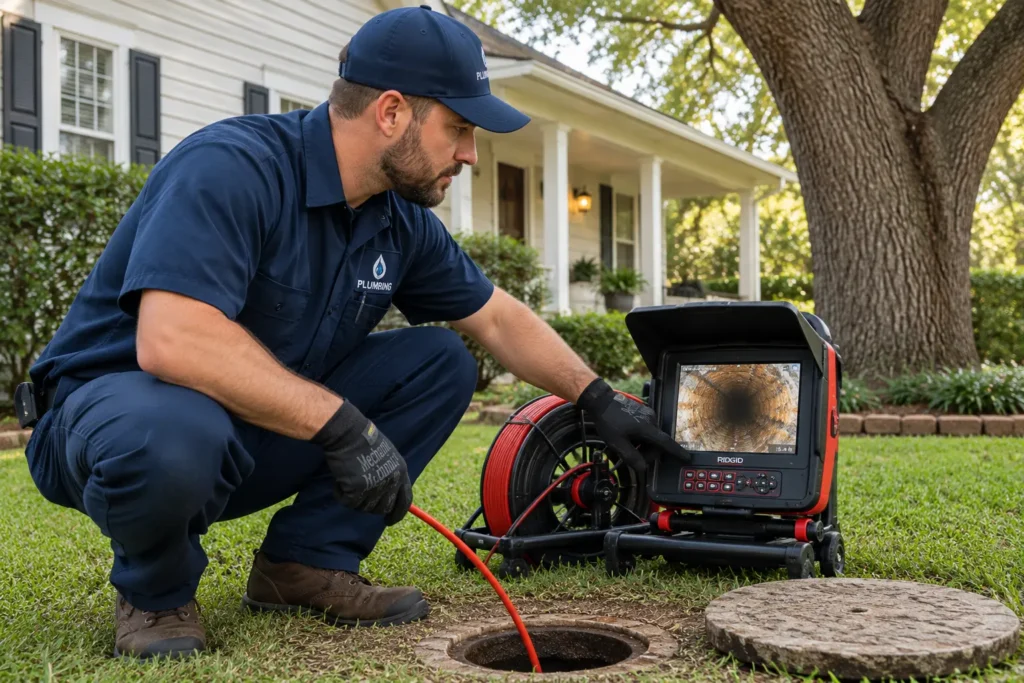
High definition sewer cameras are threaded directly through your existing drain system access points, typically through a cleanout or through the toilet rough-in, and driven through the line under remote control while transmitting real-time video to a monitor at the surface. The camera reveals the interior condition of the pipe: channeling depth, root infiltration, collapsed sections, joint separations, standing water from inadequate fall, and the exact location of each finding measured from the access point.
For galvanized steel supply line issues, specialized borescope cameras can be inserted through access points in supply line systems to visualize interior rust scale accumulation and the location of developing pinhole areas.
Camera inspection is the single most important diagnostic step for any older Houston home showing symptoms of sewer or drain line deterioration. It converts a symptom into a confirmed diagnosis with documented location data, which allows repair decisions to be made based on actual pipe condition rather than estimated age and probability.
Acoustic Leak Detection
Acoustic leak detection uses sensitive electronic listening equipment to hear the pressure differential sound produced by water escaping a supply pipe under pressure. A pressurized water supply line with a pinhole leak produces a distinctive sound signature as water is forced through a microscopic breach. Specialized ground microphones and contact sensors placed on floors, walls, and pipe access points allow a technician to triangulate the precise location of that sound within several inches.
This technology is particularly valuable for Montrose plumber sewer repair situations and for historic homes where supply lines run beneath original hardwood floors or behind original plaster walls. Pinpointing the leak location before opening any surface allows for a small, targeted repair access rather than removing a large section of irreplaceable historic material to search for the problem.
Hydrostatic Pressure Testing
Hydrostatic testing works by temporarily plugging the main drain line, filling the drain system with water from a cleanout access point, and then monitoring the water level over a specified period. A properly sealed drain system holds the water level stable. A system with cracks, joint separations, or channeling will show a declining water level as water escapes through the compromised sections.
Hydrostatic testing is valuable for confirming whether a cast iron drain system has active leakage before committing to a camera inspection, and it provides an overall pass or fail assessment that can help prioritize further diagnostic steps. For Houston Heights leak detection situations where the homeowner wants to know whether the system as a whole is compromised before getting into the details, hydrostatic testing is often the right first step.
Thermal Imaging
Thermal imaging cameras detect temperature differentials on surfaces, which allows technicians to identify active water intrusion behind walls and under floors without opening those surfaces. A slab leak from a pressurized hot water supply line creates a warm spot on the floor surface directly above it. A slow drain line leak saturating sub-slab soil creates a moisture pattern that reads differently on thermal imaging than dry surrounding material.
In River Oaks and other properties with significant finished surfaces and original materials, thermal imaging combined with acoustic detection allows our technicians to approach a suspected leak with a precise location before making any access opening, reducing the impact on historic finishes to an absolute minimum.
Your Repair Options for Historic Houston Plumbing
Understanding what is failing is one thing. Understanding what to do about it, and specifically how modern repair methods protect historic properties differently than older approaches, is what ultimately guides homeowners toward the right decision.
Trenchless Pipe Lining for Cast Iron Drain Lines
Trenchless pipe lining, sometimes called cured-in-place pipe or CIPP lining, is a technology that creates a new structural pipe within the existing deteriorated cast iron host pipe without any excavation. A flexible liner saturated with epoxy resin is inserted through an existing cleanout or access point and positioned within the target pipe section. Compressed air or hot water is used to expand the liner against the interior of the old pipe. The resin cures in place, and what remains is a new, smooth, joint-free pipe inside the old cast iron shell that is structurally independent of the deteriorated host pipe.
The resulting liner has a slightly reduced interior diameter compared to the original pipe, but a smooth, root-resistant, seamless surface that often improves flow characteristics compared to a channeled cast iron pipe despite the diameter reduction. It eliminates joints where roots can enter, seals active leak points, and restores structural integrity to sections that were fracturing or deforming.
For Heights and Montrose homeowners with accessible cast iron sewer lines (those running beneath crawlspaces, in utility areas, or along accessible interior routes), trenchless lining frequently allows repair of significant pipe sections without any excavation at all. For lines beneath slabs, lining through access tunnels can dramatically reduce the excavation required compared to full pipe replacement.
Targeted Tunneling for Under Slab Cast Iron Lines
When a cast iron line beneath a Houston slab requires replacement rather than lining (because the pipe has collapsed, channeled completely, or the deterioration is too severe for a liner to restore structural integrity), tunneling is the preferred approach for historic homes over interior saw-cutting.
Tunneling involves excavating beneath the slab from the exterior, creating a tunnel below the foundation rather than through it. The pipe work is completed underground, and the tunnel is then backfilled and compacted. The original slab, original floors, and interior finishes are not disturbed.
In River Oaks estates and Heights bungalows where the original hardwood floors, period tile, and historic interior finishes are a significant part of the property’s character and value, tunneling’s protection of those surfaces is a meaningful advantage over interior access methods even when the project cost is higher.
Selective Repiping for Galvanized Steel Supply Lines
Galvanized steel supply lines cannot be reliably relined the way cast iron drain lines can. The selective repiping approach used by experienced Houston plumbers involves assessing which sections of the galvanized system are actively failing or most severely restricted and replacing those sections with modern PEX or copper supply piping while leaving intact sections in service.
PEX (cross-linked polyethylene) has become the dominant supply pipe material for Houston repiping work because it is flexible (making it easier to route through existing wall cavities without the same degree of surface disruption required for rigid copper), highly resistant to both corrosion and the effects of occasional freeze events, and significantly less expensive than copper at material cost. For historic Houston homes, PEX’s flexibility often allows threading new supply lines through existing wall cavities with minimal surface disturbance compared to rigid pipe alternatives.
A complete repipe of a 2,000 square foot older Houston home typically involves replacing all supply lines from the point where the city water service enters the home through all branch lines serving fixtures throughout the house. Selective repiping addresses only the sections showing active problems or highest failure risk. The right approach for any specific property depends on the overall condition of the existing system as revealed by inspection, the presence of active pinhole leaks, and the homeowner’s goals for the property going forward.
What Historic Houston Homeowners Should Do Before a Problem Becomes a Crisis
The consistent pattern we encounter in older Houston neighborhoods is that homeowners become aware of a plumbing issue only after it has progressed significantly further than it needed to. A slow drain that has been gradually worsening for two years before a camera inspection reveals a cast iron line that is 80 percent occluded by root growth and scale. A water bill that has been slightly elevated for months before a pinhole supply leak is finally traced to a galvanized line inside a wall cavity.
The nature of both cast iron drain failure and galvanized steel supply failure is that both processes are gradual and largely invisible in their early stages. Neither announces itself dramatically until something significant gives way.
The most practical approach for any owner of a Heights, Montrose, or River Oaks home built before 1975 who has never had a professional assessment of their plumbing infrastructure is to schedule a diagnostic inspection before symptoms develop rather than waiting for them. A sewer camera inspection and a supply system assessment of an older Houston home takes a few hours and produces a clear picture of what is working, what is showing early deterioration, and what needs attention now. That information allows a planned, budgeted approach to a known maintenance item rather than an emergency response to a catastrophic failure at the worst possible time.
For homeowners who have already begun noticing symptoms, the right response is not continued monitoring. It is a professional diagnostic call to characterize exactly what is failing and how severely before the next Houston rainfall event, the next cold front, or the next heavy-use period pushes a manageable problem into an unmanageable one.
Get a Professional Assessment From Leak Detection Houston
Our team at Leak Detection Houston specializes in advanced diagnostic work for older homes with complex plumbing histories across The Heights, Montrose, River Oaks, and surrounding historic Houston neighborhoods. We use HD sewer cameras, acoustic listening equipment, thermal imaging, and hydrostatic pressure testing to give you a complete, accurate picture of your property’s plumbing condition without exploratory destruction of your historic home’s character.
We provide honest, detailed reporting of everything we find, clear explanation of your repair options and the tradeoffs between them, and transparent pricing before any work begins. Our technicians understand that a historic Houston home is not just a structure to be serviced. It is a property with irreplaceable character that deserves a thoughtful approach.
Call us or schedule online for a historic home plumbing assessment. Do not wait for a flooded floor or a collapsed sewer line to learn the condition of the infrastructure beneath your property.
Frequently Asked Questions
How do I know if my Houston Heights or Montrose home has cast iron pipes?
Any home built before approximately 1975 in The Heights, Montrose, River Oaks, or surrounding historic Houston neighborhoods almost certainly has original cast iron drain and sewer lines. Homes built in these neighborhoods through the 1960s also very likely have galvanized steel supply lines if no repiping has been completed. A sewer camera inspection and supply system assessment can confirm exactly what materials are present and their current condition.
What is channeling in a cast iron pipe and how serious is it?
Channeling is the progressive corrosion of the bottom of a cast iron drain pipe caused by the acid reaction between sewer gases, moisture, and the pipe metal over decades. It creates a groove along the pipe floor that deepens with time until the pipe effectively has no bottom and waste escapes into the surrounding soil. It is a serious condition that indicates the affected pipe sections need repair or replacement rather than clearing.
Can cast iron drain lines in Houston be repaired without breaking through floors?
In many cases, yes. Trenchless pipe lining through existing cleanout access points can restore structurally compromised cast iron lines without any floor or slab disturbance. For collapsed or severely channeled sections beneath slabs, exterior tunneling avoids disturbing interior floors and finishes. Whether a specific line qualifies for a non-invasive approach depends on the nature and location of the damage as revealed by camera inspection.
How long does galvanized steel pipe last in Houston?
Under Houston’s specific water chemistry and climate conditions, galvanized steel supply pipe typically has a practical service life of 40 to 60 years before internal corrosion becomes significant enough to affect water quality, pressure, and pipe integrity. Most galvanized steel supply lines still in service in Houston homes built before 1965 are either already failing or approaching the point of failure.
What is the difference between cast iron sewer line repair and galvanized steel pipe replacement?
Cast iron sewer lines are drain pipes that carry waste and wastewater away from the home to the city sewer system. Galvanized steel pipes are supply lines that carry pressurized clean water from the city connection to fixtures throughout the home. They are different systems made of different materials with different failure modes and different repair approaches. Many older Houston homes need attention to both systems simultaneously, which is why a complete plumbing assessment is more useful than addressing symptoms individually as they appear.