

Houston backyard with an outdoor kitchen and pool heater served by a private gas line Outdoor kitchens, fire pits, and pool heaters often rely on a private gas line the utility does not mark.
You are planning a backyard upgrade. Maybe it is a pool heater, an outdoor kitchen, a fire pit, a standby generator, or just a new fence. You do the responsible thing and call 811 before anyone breaks ground. Flags and paint go down, and everyone relaxes. But here is the part that surprises many Houston homeowners: the flags may not show the private gas line that feeds your own appliances.
That gap is where most gas line accidents in residential yards begin. This guide explains what a private gas line is, who owns it, what the free locate service does and does not cover, and how to protect your family and your project before a shovel goes in the ground. If you already smell gas or suspect a leak, skip ahead and contact our team through the gas leak detection page. If you are planning, read on.
What Is a Private Gas Line?
Every gas customer has two kinds of buried pipe. The first belongs to the gas utility. It runs from the main in the street to your meter, and the utility is responsible for it. The second kind starts at the meter and goes to your house, your detached garage, your pool heater, your grill, or any other appliance. That piping is a private gas line, and it belongs to you.
CenterPoint Energy, the natural gas utility for much of the Houston area, states that buried gas piping running from the meter to a building or gas equipment is the property owner’s responsibility to maintain. Properties that use propane have the same idea in a different form. The line from the tank to the house, to a pool heater, or to a generator is private, and the propane supplier may or may not have a record of where it runs.
This matters because a private gas line is often installed once and then forgotten. It might have been added by a previous owner, a pool company, or an outdoor kitchen contractor. Nobody remembers where it goes, and there may be no drawing of it.

Infographic showing the utility owned gas line up to the meter and the homeowner owned private gas line after it The meter is the usual dividing point, and everything after it is your private gas line.
What Texas811 Does and Does Not Mark
Calling 811 is free, and it is the right first step for any digging project in Texas. Texas811 notifies utility operators, and their locators mark the underground facilities they own. That usually means the utility’s gas service line up to the meter, along with public electric, water, sewer, and communication lines.
What it generally does not mark is anything privately owned. The table below shows how it usually works.
| Buried line | Usually marked by the 811 process? | Who to ask |
|---|---|---|
| Utility gas main and service line to the meter | Yes | Texas811 and the gas utility |
| Private gas line from meter to house | Generally no | Private locator or licensed professional |
| Gas line to a pool heater, grill, fire pit, or generator | Generally no | Private locator or licensed professional |
| Propane line from tank to house | Generally no | Propane supplier or private locator |
| Irrigation, landscape lighting, drainage lines | Generally no | Installer records or private locator |
Practices vary by utility and by situation, so never assume. Still call 811, because the public lines near your project matter, and then take the extra step for the private ones.
Which Houston Projects Put a Private Gas Line at Risk
Many ordinary weekend projects involve digging in places where a private line may run. Common ones include:
- Installing or moving a pool, spa, or pool heater.
- Building an outdoor kitchen, grill island, or fire pit.
- Setting fence posts or replacing a fence line.
- Extending a patio, driveway, or walkway.
- Adding a French drain or regrading a yard to deal with Houston’s heavy rain.
- Installing a sprinkler system or landscape lighting.
- Planting or removing large trees.
- Adding a generator, a detached garage, or a workshop.
A few of these projects also create new gas demand. A pool heater or generator often means a new branch off an existing line, and that branch should be documented. A private gas line that is added without any record becomes the next homeowner’s mystery.
What Happens When a Gas Line Gets Hit
A damaged line can range from a small nick to a clean break. A nick may leak slowly for days or weeks before anyone notices, especially outdoors where the gas disperses. A break is an emergency: gas escapes quickly, the area may need to be evacuated, and service may be shut off while repairs are made.
Costs depend on the damage, the depth, and the surface. General cost guides put a simple private line repair in the range of a few hundred to well over a thousand dollars, and the number climbs when concrete, landscaping, or a pool deck has to be removed and restored. Insurance coverage varies, and damage caused during digging is not always covered, so it is worth asking your agent before a project begins.
The better answer is prevention. A small effort to find the line first usually costs far less than any repair.
How to Find a Private Gas Line Before You Dig
You do not need special tools to start. You need patience and a plan.
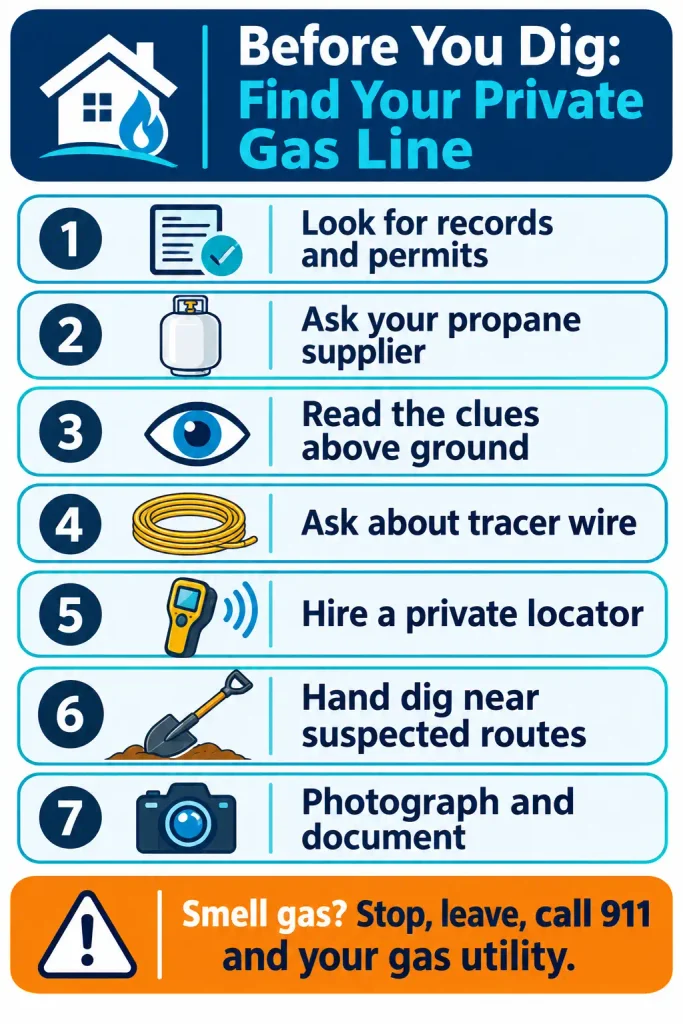
- Look for records. Check closing documents, past permits, pool or outdoor kitchen contracts, and any drawings left by the builder. Ask the contractor who installed an appliance whether they kept a route sketch.
- Ask your propane supplier. If you have a tank, the supplier may know the route of the line, and some will mark it or help you find someone who can.
- Read the clues above ground. Follow the meter, the point where gas enters the house, and the places where gas appliances connect. Pool heaters, grills, and generators often sit in line with the buried pipe that serves them.
- Know what tracer wire is. Many modern plastic gas pipes include a thin tracer wire so a locator can find them later. A line without one is harder to trace, so ask installers to include it on new work.
- Hire a private locator. A professional who finds private lines can sweep the work area and mark what is there. Our gas page lists underground gas line locating and gas meter to house line tracing for exactly this kind of situation.
- Hand dig near suspected routes. Even with marks, dig carefully by hand when you get close to a line. Machines turn a small error into a major repair.
- Photograph and document. Before you close a trench or pour concrete, take photos with a tape measure showing depth and location. Keep them with your house records.
When You Smell Gas During or After a Project
If you notice a rotten egg smell, a hissing sound, bubbling in wet ground, or dead plants near freshly disturbed soil, stop work immediately. Move everyone away from the area, and do not use anything that could create a spark. Once you are at a safe distance, call 911 and your gas utility’s emergency line. Wait for the all clear before going back.
After the area is safe, a leak specialist can help pinpoint where gas is escaping so the licensed repair is done in the right spot. Our team does that work without opening more of your yard than necessary. You can read how we do it on our gas leak detection page, or visit the Leak Detection Houston home page to see everything we cover.
After a Storm or Flood
Houston weather can affect buried gas lines in quiet ways. Heavy rain saturates clay soil, and the ground then swells, shifts, and shrinks as it dries, which stresses pipe joints over time. Flooding can also damage meters, regulators, and appliances. If your home or yard has flooded, do not turn gas appliances back on yourself. Have a licensed professional or your utility check the system first.
Storms often bring other damage too. If water got into the house through the roof, our guide on a roof leak after a storm walks through the first 24 hours of protecting the home and documenting damage.
Buying a Home With Outdoor Gas Features
Home buyers inherit every buried line on the property, even the ones no one has mapped. If the house has a pool heater, an outdoor kitchen, a generator, or a detached garage with a heater, ask the seller for records of the gas work and the permits. A qualified inspector can check visible connections, and a leak specialist can help if anything seems off.
The same logic applies below ground in other directions. Our guide to a sewer line inspection before buying a home explains why a camera look at the drain line belongs on the same checklist, especially for older homes with large trees.
Your Yard Has More Than One Buried Line
A typical Houston yard may hold a water service line, a sewer line, irrigation, electrical, and one or more private gas lines. A trench that misses one can hit another. If you are concerned about a damp spot, a spike in your water bill, or low water pressure while you are planning excavation, the issue may be the water line instead of gas. Our article on an underground water line leak explains who is responsible and what to do, and our underground leak detection service can pinpoint the problem without digging.
If you have a pool, remember that its equipment, plumbing, and heater lines add more buried pipe. Our guide on a pool losing water shows how to test whether a falling waterline is evaporation or a leak before you start tearing up the deck.
A Simple Plan Before Any Digging Project
- Call 811 and wait for the marks.
- Ask your propane supplier about tank lines if you have a tank.
- Gather records for any past outdoor gas work.
- Hire a private locator for the work area if you are not sure.
- Hand dig close to every mark.
- Photograph new lines and keep the record with your home documents.
- If anything smells like gas, stop, leave, and call 911 and your gas utility.
Frequently Asked Questions About a Private Gas Line
Who owns the private gas line on my property?
Generally you do. Buried gas piping that runs from the meter to your house or equipment is the property owner’s responsibility to maintain, according to the utility’s own safety guidance.
Does 811 mark my private gas line?
Usually not. The free locate process focuses on the utility’s own lines, so private lines past the meter often need a private locator or other records.
Can a private gas line leak without a smell?
It can seem that way. Odor can fade, wind can carry the scent away outdoors, and some people do not notice it. Other signs include hissing, bubbling in wet soil, dead plants, and a pilot light that keeps going out.
Who repairs a damaged private gas line?
A licensed professional should do it. A leak specialist can pinpoint the location first so the repair is made in the right spot.
How do I know if I have a private gas line to a pool heater or grill?
Trace the pipe from the appliance, check your paperwork, and ask the installer or propane supplier. If you still cannot confirm it, a private locator can help.
Plan Smart, Dig Safe
A private gas line is easy to forget until something goes wrong. A short list of questions before you dig can prevent a dangerous and expensive mistake. If you suspect a leak or want help locating the line, call us today for a free quote, or visit our gas leak detection page to learn how we work.